Hereditary ATTR is heterogeneous by definition. Symptoms can be predominantly neurologic, cardiac, or mixed from the start. But as the disease progresses, a mixed-phenotype presentation becomes more and more likely.4
This list of signs is not intended to be exhaustive.
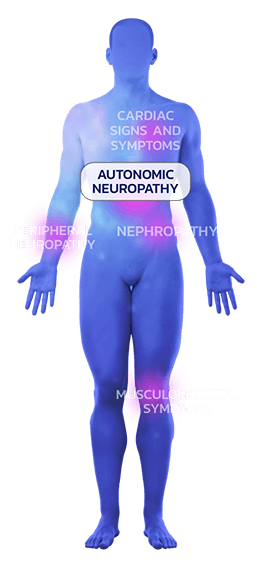

Orthostatic hypotension
Gastrointestinal disturbances (e.g., constipation, diarrhea)
Sexual dysfunction
Urinary incontinence
Recurrent urinary tract infections
Nausea
Unexplained weight loss

Rapidly progressive, painful neuropathy in hands and feet
Muscle weakness, difficulty walking, and falls

Heart failure (including HFpEF)
Atrial fibrillation
Conduction abnormalities
Peripheral edema
Unexplained increased LV wall thickness
Low-flow, low-gradient aortic stenosis with preserved LVEF (>60 years of age)

Carpal tunnel syndrome (bilateral)
Knee or hip pain
Lumbar spinal stenosis
Renal failure
Proteinuria
AUTONOMIC SYMPTOMS ARE A HALLMARK OF hATTR, PRESENT IN ALMOST ALL MUTATIONS6
Autonomic dysfunction tends to progress in parallel with sensory and motor dysfunction, yet it is often overlooked or missed altogether in the presence of prominent cardiac symptoms or motor impairment.6

ROUTINELY ASSESSING AUTONOMIC DYSFUNCTION CAN HELP PREDICT DISEASE PROGRESSION6
Validated tests and questionnaires assess autonomic symptoms across multiple different domains, such as:6-8








Screen for autonomic symptoms early and often, as they are common, progressive, and have a significant impact on patients’ quality of life6
hATTR HAS A PROFOUND IMPACT ON PATIENTS’ QUALITY OF LIFE9
One study showed that:9







Evaluate the quality-of-life impact of ATTR – not just the signs and symptoms – before irreversible damage takes away your patients’ independence

With mixed-phenotype hATTR expected in up to 80% of patients (depending on mutation), multi-disciplinary consultation is crucial4,5
.png)
ATTR is a systemic, progressive, and fatal disease caused by misfolded TTR, a protein produced by the liver1,3,10
Sign up for AstraZeneca mail to stay connected with your representative(s) and receive communications from AstraZeneca.
3 reasons to sign up:

Easy-to-access patient tools Educational materials requested by you arrive in your inbox ready to print or email.

Don’t miss out on educational events that may interest you Paperless invitations go straight from your inbox into your calendar.

Stay informed Receive the latest news about our products and more.