Pathophysiology
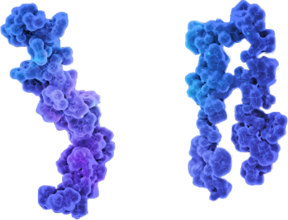
Transthyretin (TTR) is a tetrameric protein produced in the liver that serves as a plasma transport
protein carrying thyroxine and retinol. In patients with ATTR, unstable TTR tetramers may dissociate
due to genetic mutation or age and misfold into amyloid fibrils. These fibrils can then deposit in
tissues and/or organs throughout the body, leading to a constellation of symptoms.2-4
At the source: The liver2-5
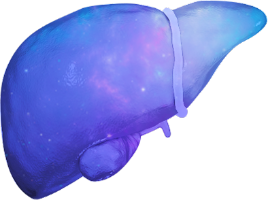





Liver
(where 90% of
TTR is produced)
(where 90% of
TTR is produced)
TTR tetramers destabilizes
Tetramer dissociates into monomers
Monomers misfold
and aggregate into
amyloid fibrils
and aggregate into
amyloid fibrils
Amyloid deposits throughout the
body
body
At risk: Multiple organs and tissues6



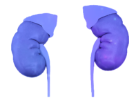


Peripheral and
autonomic
nerves
autonomic
nerves
Heart
Gastrointestinal tract
Kidneys
Eyes
Connective
tissue
tissue
Hereditary vs. wild-type ATTR
ATTR can be divided into 2 types: hereditary or wild type. Hereditary transthyretin amyloidosis (hATTR) is inherited
in an autosomal dominant manner with variable penetrance. Mutations in the TTR gene lead to the formation of
abnormal proteins. Wild-type ATTR (ATTRwt) develops with age and is acquired when normal TTR tetramers
destabilize and become amyloidogenic.1,2,4
.png)
UNDERSTAND MORE ABOUT THE DIFFERENCES BETWEEN HEREDITARY AND WILD-TYPE ATTR:
WHAT IS hATTR?
- Age of onset is typically >30 years2,7
- Characterized by sensorimotor polyneuropathy (PN), autonomic neuropathy, small-fiber PN, carpal tunnel syndrome, and/or cardiomyopathy (CM), but can also include a constellation of multisystem symptoms1,4,8
- Median survival from diagnosis is 8 to 10 years for patients with predominant PN and 2.5 to 3.5 years for patients with predominant CM2
- Also known as ATTRv (for “variant”)1
WHAT IS ATTRwt?
- Patients are typically aged >60 years and male4
- Characterized mainly by cardiac symptoms, but can also include sensorimotor neuropathy, autonomic neuropathy, carpal tunnel syndrome, spinal stenosis, and other musculoskeletal manifestations1
- Median survival from diagnosis is approximately 3.5 years, with heart failure as the primary cause of death2,7
WHAT IS hATTR?
- Age of onset is typically >30 years2,7
- Characterized by sensorimotor polyneuropathy (PN), autonomic neuropathy, small-fiber PN, carpal tunnel syndrome, and/or cardiomyopathy (CM), but can also include a constellation of multisystem symptoms1,4,8
- Median survival from diagnosis is 8 to 10 years for patients with predominant PN and 2.5 to 3.5 years for patients with predominant CM2
- Also known as ATTRv (for “variant”)1
WHAT IS ATTRwt?
- Patients are typically aged >60 years and male4
- Characterized mainly by cardiac symptoms, but can also include sensorimotor neuropathy, autonomic neuropathy, carpal tunnel syndrome, spinal stenosis, and other musculoskeletal manifestations1
- Median survival from diagnosis is approximately 3.5 years, with heart failure as the primary cause of death2,7
.png)
Use genetic testing to differentiate between hATTR and ATTRwt, and to prompt testing of at-risk relatives3,8
About hATTR-PN
PROGRESSION OF hATTR-PN IS RAPID AND DEBILITATIING.1,8

STAGE 18
Walking without assistance

Mild bilateral neuropathy in the lower limbs
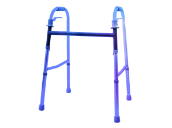
STAGE 28
Assistance required to walk
Progression of neuropathy proximally and/or to upper limbs

STAGE 38
Confined to a wheelchair or bed

MORTALITY
Life expectancy is 8 to 10 years from diagnosis2
Polyneuropathy in ATTR:
- Can occur in wild-type disease (ATTRwt) but is more severe when inherited (hATTR).2
- Can be 15 to 20 times more rapid than diabetic neuropathy.9
- Can quickly progress from painful tingling to weakness and difficulty walking.6
- Typically includes autonomic dysfunction, even though symptoms may be subclinical and/or the patient may be reluctant to mention them early in the disease (e.g., erectile dysfunction or GI manifestations).8
Active screening for autonomic symptoms – a hallmark feature of hATTR – can help diagnose the disease
before irreversible progression8,10
About ATTR-CM
IN ATTR-CM, CARDIAC SYMPTOMS SIGNAL LATER-STAGE DISEASE11

STAGE A11
Extra-cardiac amyloid deposits and symptoms

STAGE B11
Early clinical HF (dyspnea, AF, arrhythmias, etc.)

STAGE C11
Restrictive HF

STAGE D11
End-stage HF
MORTALITY
Life expectancy is 2.5 to 3.5 years from diagnosis2,7
ATTR should be suspected in HF patients presenting with certain atypical features: 1,3
• Predominant right-sided symptoms (e.g., distended jugular veins, anorexia, gastrointestinal upset)
• Unexplained increased left-ventricular wall thickness
• Low-flow, low-gradient aortic stenosis with preserved LVEF in patients >60 years
About mixed-phenotype hATTR
MIXED-PHENOTYPE hATTR IS MORE COMMON THAN YOU MIGHT THINK1,9
Although patients may present with predominantly PN or CM symptoms, hATTR is a systemic disease where a significant proportion of patients have mixed presentation of both PN and CM1,8,9
%20(4).png)
Up to 80%
OF PATIENTS WITH hATTR HAVE MIXED
-PN AND -CM PRESENTATION
DEPENDING ON MUTATION9

Multi-systemic symptoms are a red flag for hATTR, with autonomic dysfunction present in almost all mutations8,10

With mixed-phenotype hATTR expected in up to 80% of patients (depending on mutation), multi-disciplinary consultation is crucial9,12

Sign up for AstraZeneca mail
Sign up for AstraZeneca mail to stay connected with your representative(s) and receive communications from AstraZeneca.
3 reasons to sign up:

Easy-to-access patient tools Educational materials requested by you arrive in your inbox ready to print or email.

Don’t miss out on educational events that may interest you Paperless invitations go straight from your inbox into your calendar.

Stay informed Receive the latest news about our products and more.